
For decades, owners were told a simple rule: one dog year equals seven human years. It is easy to remember, but it is wrong. A one-year-old dog is not like a seven-year-old child; most dogs are physically mature and capable of having puppies at that age. And a tiny Chihuahua and a Great Dane certainly do not age at the same pace. Modern research gives us a far better picture of how dogs age, and understanding it can help you give your dog the right care at the right time. In this guide we explain the science behind dog years, why size matters so much, the life stages every owner should know, and how to use our free Dog Age Calculator to convert your dog’s age into human years.

Where did the “multiply by seven” rule come from?
Nobody is quite sure. The most common explanation is that someone compared an average human lifespan of around 70 years with an average dog lifespan of around 10 years and divided one by the other. It made a neat rule of thumb, but it ignores two important facts. First, dogs age far faster in their first two years than later in life. Second, the speed of ageing varies hugely with body size. A linear rule simply cannot capture either of those patterns.
The science: the DNA methylation formula
In 2020, researchers at the University of California San Diego published a study in the journal Cell Systems that looked at chemical changes to DNA, known as methylation, which accumulate in a predictable way as mammals age. These changes act like a molecular clock. By comparing the methylation patterns of Labrador Retrievers with those of humans, the researchers created a formula that matches dog age to human age based on biological ageing rather than guesswork:
Human age = 16 × ln(dog age in years) + 31
Here “ln” means the natural logarithm. You do not need to calculate it yourself; that is what our age calculator is for. What matters is the shape of the curve. A logarithmic curve rises very steeply at first and then flattens out. That fits real life: puppies race through infancy, childhood and adolescence in about two years, and then ageing slows down through middle age.
| Dog’s age | Approximate human age (DNA formula) | “× 7” rule |
|---|---|---|
| 1 year | 31 | 7 |
| 2 years | 42 | 14 |
| 3 years | 49 | 21 |
| 4 years | 53 | 28 |
| 6 years | 60 | 42 |
| 8 years | 64 | 56 |
| 10 years | 68 | 70 |
| 12 years | 71 | 84 |
| 14 years | 73 | 98 |
The raw formula was derived from Labradors, a medium-to-large breed, and is less reliable for very young puppies, so on its own it does not tell the whole story. That is why our Dog Age Calculator adjusts the result according to your dog’s adult size category.
Why size changes everything
In most mammals, bigger species live longer: elephants outlive mice. Within dogs, the opposite is true. Small breeds generally live significantly longer than large and giant breeds. Scientists are still investigating exactly why, but one leading theory is that large breeds grow so quickly as puppies that their bodies age faster, with a higher risk of age-related conditions arriving earlier.
A large UK study of more than half a million companion dogs, published in 2024 in Scientific Reports, found a median life expectancy of around 12.5 years across all dogs, but with big differences between breeds. Some small breeds, such as the Lancashire Heeler and Tibetan Spaniel, averaged over 15 years, while some flat-faced breeds, such as the French Bulldog, averaged under 10. Giant breeds also tend to have shorter lifespans.
| Size category | Typical adult weight | Typical lifespan | Usually considered senior from |
|---|---|---|---|
| Toy | under 5 kg | 13–16 years | around 10–12 years |
| Small | 5–10 kg | 12–15 years | around 10 years |
| Medium | 10–25 kg | 11–14 years | around 8–9 years |
| Large | 25–45 kg | 10–12 years | around 7–8 years |
| Giant | over 45 kg | 7–10 years | around 5–6 years |
These are broad guides; individual dogs vary with genetics, diet, weight and care. Keeping your dog lean is one of the best ways to extend their healthy years, and our Calorie Calculator can help.
How to use the Dog Age Calculator
- Enter your dog’s age in years and months.
- Choose the adult size category: toy, small, medium, large or giant. For puppies, choose the size you expect them to reach.
- Pick the direction: dog years to human years, or human years to dog years.
- Read the result, along with the life stage your dog is in.
If you are not sure which size category your dog belongs to, our weight calculator can estimate adult weight, and the Dog Breed Identifier can suggest a likely breed mix for dogs of unknown background.

The life stages of a dog
Puppy (birth to around 6–12 months)
Puppies develop at incredible speed. By eight weeks they are weaned and ready for a new home; by around six to seven months they have all their adult teeth. This is the critical window for socialisation, training and building good habits. Nutrition matters enormously, so feed a complete puppy food in several small meals and use our Food Portions calculator to avoid overfeeding.
Adolescent or junior (around 6 months to 2 years)
The teenage phase. Dogs reach sexual maturity, test boundaries, and may suddenly “forget” their training. Small breeds reach adult size quickly, while giant breeds may keep growing until around two years. Patience and consistent training pay off.
Adult (around 2 years to 7 years, depending on size)
Your dog is physically mature and usually at their most settled and energetic. Focus on maintaining a healthy weight, regular exercise, dental care and annual vet check-ups.
Mature or senior (from around 6–10 years, depending on size)
Ageing starts to show: a greying muzzle, slower recovery after exercise, maybe a little stiffness. Many vets recommend check-ups every six months from this stage, because problems caught early are easier to treat.
Geriatric (the final years)
Very old dogs may have reduced vision, hearing and mobility, and some develop canine cognitive dysfunction, similar in some ways to dementia in people. Comfort, routine and close veterinary support become the priorities.
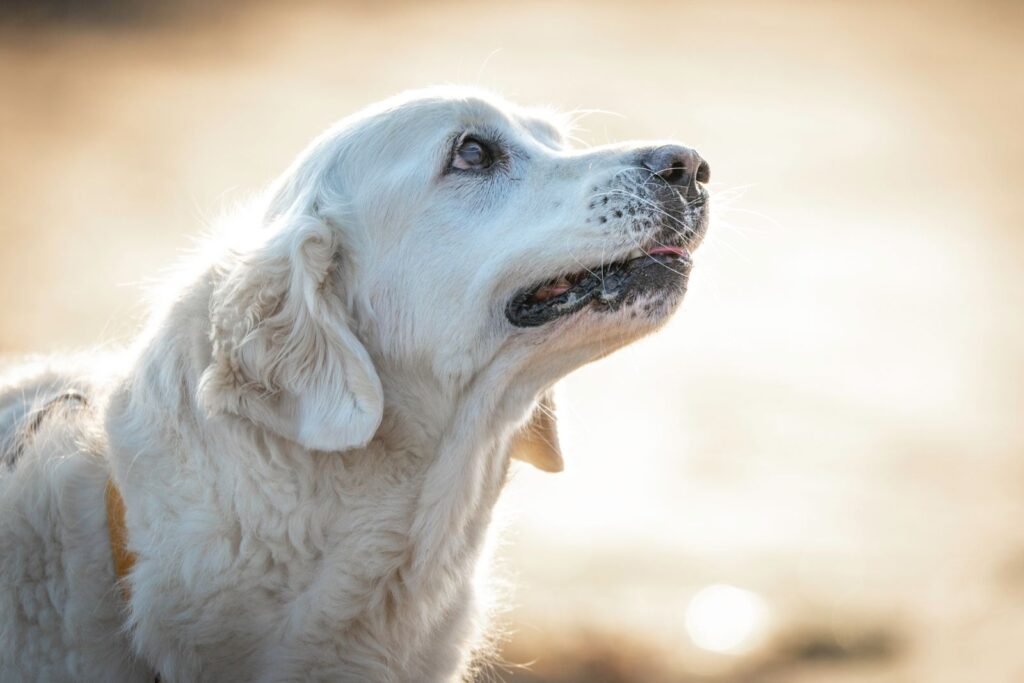
Development milestones: dogs and people side by side
One of the clearest ways to see why the old rule fails is to compare developmental milestones. A puppy opens its eyes at around two weeks old, starts exploring at three to four weeks and is weaned by about eight weeks, a journey that takes a human baby many months. By six months, a puppy has a full set of adult teeth, something children do not achieve until early adolescence. Most dogs reach sexual maturity somewhere between six months and a year, roughly equivalent to the human teenage years, and many small breeds are fully grown by their first birthday.
The middle years are where dog and human ageing line up more evenly. A healthy medium-sized dog between about three and seven years old ages fairly steadily, and that is reflected in the flattening of the logarithmic curve. The final stage is where size matters most: a giant breed can move from active adult to senior in just a few years, while a small terrier may stay sprightly well into double figures.
Converting human years to dog years
Our calculator also works in reverse. Choose the human-to-dog direction and enter a human age to see the equivalent age for a dog of a given size. This is a fun way to explain ageing to children, for example showing that a dog who is “the same age” as a ten-year-old child is actually still a young puppy, or that a grandparent and an elderly family dog may be at a similar stage of life. It is also a useful way to picture what your dog might need in the years ahead, whether that is more patient training, gentler exercise or a softer bed.
Signs your dog is getting older
- Grey hair around the muzzle, eyes and face.
- Sleeping more and being slower to get up.
- Stiffness, particularly after rest or in cold weather.
- Cloudy eyes (often a harmless change called nuclear sclerosis, but cataracts should be checked by a vet).
- Reduced hearing or slower responses to cues.
- Weight changes, either gain from reduced activity or loss from muscle wastage or illness.
- Changes in thirst, appetite or toileting habits.
- Confusion, pacing at night or getting “stuck” in corners, which can signal cognitive decline.
Any sudden change deserves a vet visit. Do not assume something is “just old age” until treatable problems such as arthritis pain, dental disease, kidney disease or thyroid problems have been ruled out.
Caring for a senior dog
- Vet checks every six months, including blood and urine tests as your vet advises.
- Keep them lean. Extra weight puts pressure on ageing joints. Senior dogs often need fewer calories; recalculate with our Calorie Calculator.
- Keep moving. Shorter, more frequent walks are often better than one long one. Swimming and hydrotherapy are gentle on joints.
- Exercise the brain. Sniffing games, puzzle feeders and gentle training help keep the mind sharp.
- Make home easier. Non-slip rugs, ramps, raised bowls and a supportive orthopaedic bed help with comfort.
- Dental care. Dental disease is very common in older dogs and can cause pain and affect appetite.
- Watch the routine. Older dogs often find comfort in predictability.
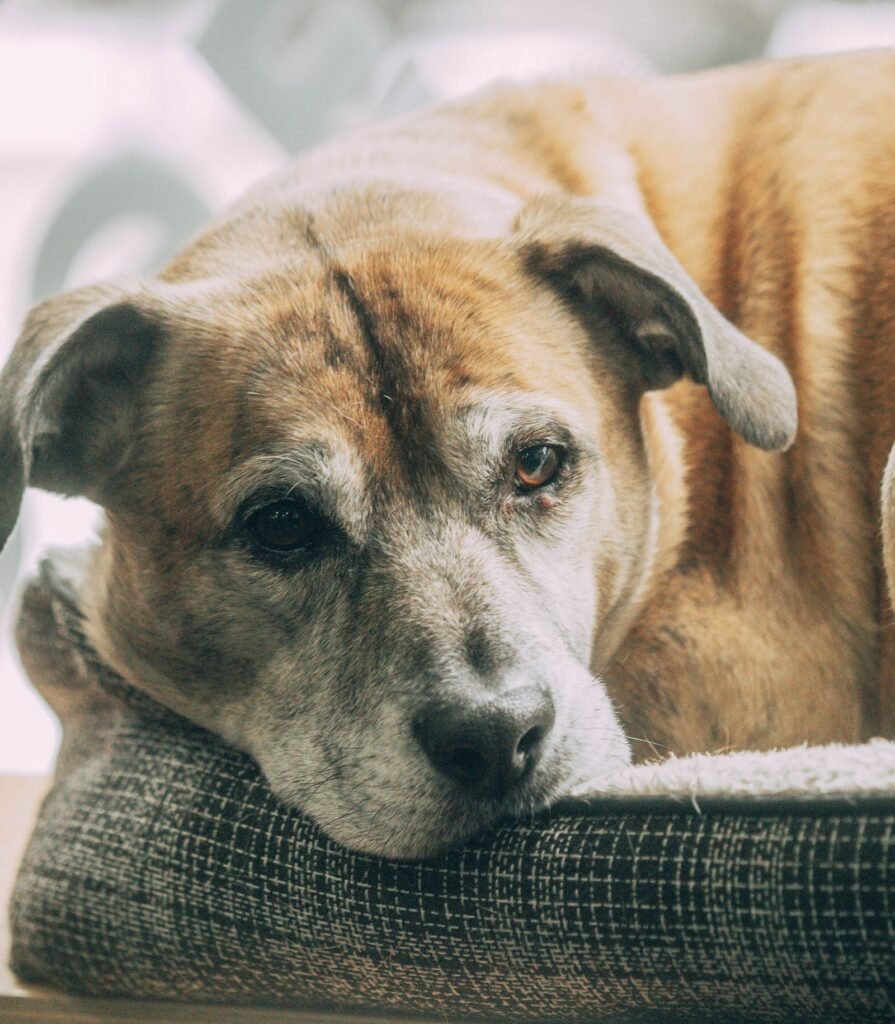
How to estimate the age of a rescue dog
If you have adopted a dog with an unknown birth date, your vet can make an educated estimate. Clues include:
- Teeth: puppies have all their adult teeth by about six to seven months. White, clean teeth suggest a young dog; tartar build-up and wear increase with age, although dental care and diet affect this.
- Eyes: a bluish haze in the lens usually develops in middle age.
- Coat: greying typically begins in middle age, although some dogs go grey early.
- Muscle tone and body shape: younger dogs usually have firmer muscle tone.
- Growth plates: an X-ray can show whether a young dog has finished growing.
Once you have an estimate, enter it into the Dog Age Calculator to see your dog’s human-equivalent age and life stage.
Why knowing your dog’s “human age” is useful
Converting dog years to human years is fun, but it is also a powerful reminder of how quickly time passes for our dogs. A large-breed dog of seven may already be in the equivalent of their sixties. Thinking of your dog in those terms helps you notice changes, schedule senior health checks at the right time, and adjust exercise and diet before problems develop. It also helps when planning for the future, including insurance, which often becomes more expensive as dogs age, and the overall cost of care that you can explore with our puppy cost calculator.
Frequently asked questions
How old is my dog in human years?
It depends on your dog’s age and size. Using the DNA methylation formula, a 2-year-old dog is roughly equivalent to a human in their early forties, and a 10-year-old to a human in their late sixties, with large and giant breeds ageing faster. Use our calculator for a size-adjusted answer.
Is one dog year really seven human years?
No. Dogs age much faster in their first couple of years and more slowly afterwards, and size makes a big difference. The seven-year rule is a myth.
Which dog breeds live the longest?
Generally, small and medium breeds with moderate body shapes live longest, with many reaching their mid-teens. Giant and flat-faced breeds tend to have shorter lifespans. Mixed breeds often fall around the middle.
When is a dog considered a senior?
It depends on size: giant breeds can be considered senior from around five or six years, large breeds from around seven or eight, and small breeds from around ten.
Can I help my dog live longer?
Yes. Keeping your dog at a healthy weight, providing regular exercise and mental stimulation, good dental care, preventive vet care and prompt attention to health changes all support a longer, healthier life.
Conclusion
Dogs do not age seven years for every one of ours. They sprint through puppyhood, settle into a long adulthood and, depending on their size, enter their senior years anywhere from about five to twelve years old. Understanding where your dog is on that journey helps you give them exactly the care they need, from the right food and exercise to timely vet checks. Find out your dog’s true age in seconds and make every year count.