
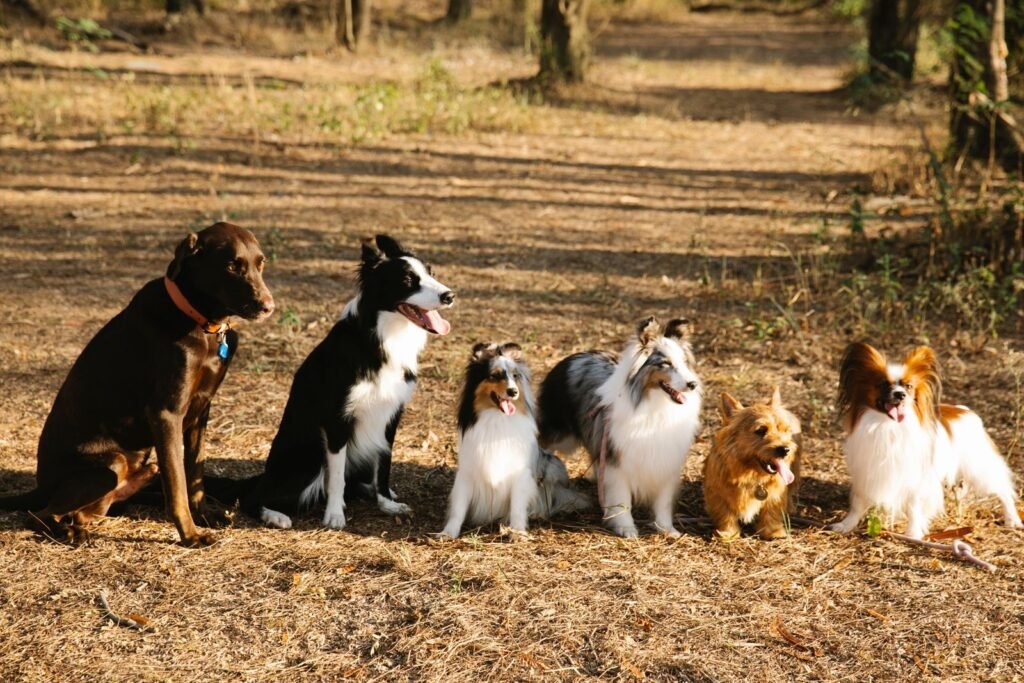
“What breed is your dog?” It is the question every dog owner hears in the park, and for owners of rescue dogs and crossbreeds it can be surprisingly hard to answer. Perhaps your dog came from a shelter labelled simply as a “crossbreed”, or perhaps you bought a puppy that has grown into something quite different from what you expected. Knowing your dog’s likely breed mix can help you understand their behaviour, plan their training and keep an eye out for breed-related health issues. In this guide we explain how to identify a dog’s breed by appearance, which physical clues matter most, where visual identification falls short, and how our free Dog Breed Identifier helps you build an informed best guess.
Why identify your dog’s breed?
Curiosity is a perfectly good reason, but there are practical benefits too:
- Understanding behaviour. A dog with herding ancestry may try to round up children or chase bikes. A dog with scent hound ancestry may disappear nose-down after a smell. Knowing the likely mix explains a lot.
- Training approach. Terrier types often respond best to short, game-based sessions; gundog types often love retrieve games; sighthound types may need extra recall work around moving animals.
- Exercise and enrichment. Breed heritage hints at how much physical and mental activity your dog needs.
- Health awareness. Some breeds are prone to particular conditions, such as hip dysplasia in large breeds, breathing problems in flat-faced breeds or back problems in long-backed breeds.
- Diet and size planning. For puppies of unknown origin, a likely breed mix helps estimate adult size, which affects feeding. Our weight calculator and Food Portions calculator become more useful when you know roughly how big your dog will be.
The six key clues to your dog’s breed
Professional breed judges and experienced vets look at a dog systematically, building up a picture from several features. Our breed identifier uses the same six areas.
1. Size and build
Start with the overall shape. Is your dog light and leggy, compact and muscular, long in the body with short legs, or tall and heavy? Some useful patterns:
- Deep chest, narrow waist, long legs: sighthound influence, such as Greyhound, Whippet, Saluki or Lurcher.
- Long back, short legs: Dachshund, Corgi, Basset Hound or some terriers.
- Broad chest, muscular shoulders, compact body: bull breeds such as Staffordshire Bull Terriers, or Boxers.
- Medium, athletic and balanced: many gundogs, herding breeds and spaniels.
- Very large and heavy-boned: mastiff types, Newfoundlands, St Bernards or Great Danes.
Weight and height at the shoulder give a useful size category: toy, small, medium, large or giant.
2. Head shape
Vets describe skulls in three broad types:
- Dolichocephalic (long and narrow): Greyhounds, Collies, Borzois. The muzzle is long and the skull is narrow.
- Mesocephalic (medium): Labradors, Beagles, spaniels and most mixed breeds. A balanced head and muzzle.
- Brachycephalic (short and broad): Pugs, French Bulldogs, Boxers, Shih Tzus. The muzzle is very short and the face looks flat.
A broad head with strong cheek muscles suggests bull-breed ancestry, while a wedge-shaped head can suggest a herding or Spitz breed.
3. Ear carriage
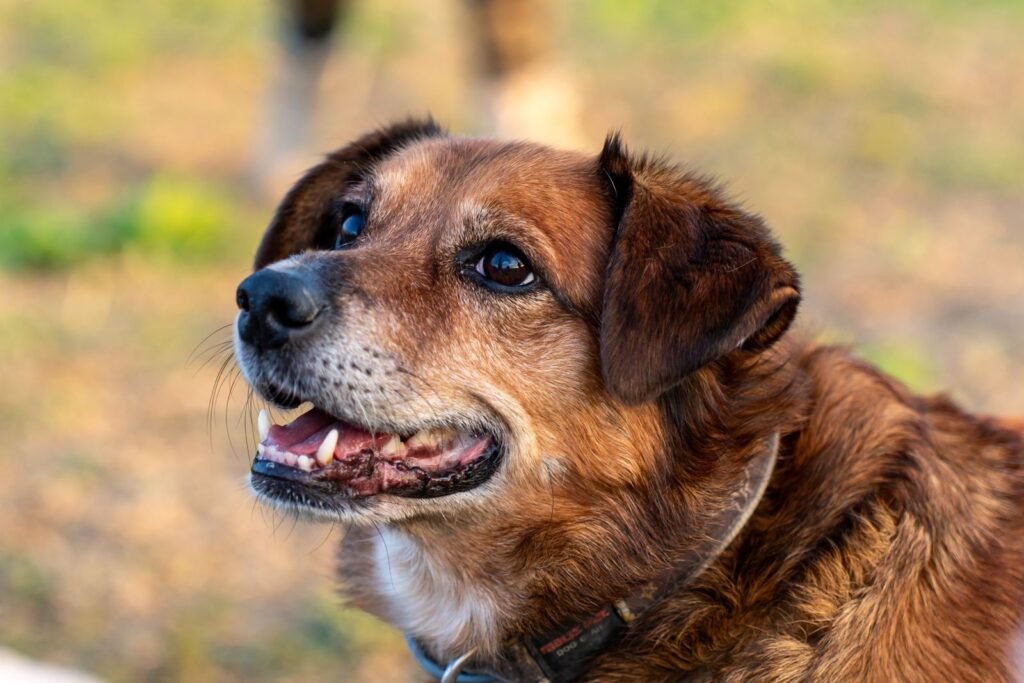
Ears are one of the most distinctive clues:
- Prick (erect) ears: German Shepherds, Huskies, Corgis, Chihuahuas and many Spitz types.
- Drop (pendant) ears: Labradors, Beagles, spaniels and scent hounds. Very long, low ears are typical of Basset Hounds and Bloodhounds.
- Rose ears: small ears that fold backwards, showing the inside, common in Greyhounds, Whippets and Bulldogs.
- Button ears: ears that fold forward at the tip, as in Jack Russells and Fox Terriers.
- Semi-prick ears: upright with the tips folding over, seen in Rough Collies and Shetland Sheepdogs.
Remember that puppies’ ears often change as they grow, sometimes standing up only at four to six months, and crossbreeds may have one ear up and one down.
4. Coat type
The coat gives strong clues, although coat colour is less reliable than coat texture.
- Short and smooth: Boxers, Staffies, Dalmatians, Greyhounds.
- Dense double coat: Labradors, German Shepherds, Huskies, Collies. These coats shed heavily twice a year.
- Wiry: many terriers, Schnauzers and wire-haired pointers.
- Curly or wavy: Poodles, Bichon Frises, water dogs and Poodle crosses such as Cockapoos and Labradoodles.
- Long and silky: Yorkshire Terriers, Shih Tzus, Maltese, setters and spaniels with feathering on the legs and ears.
Colour patterns such as brindle, merle, tan points or a white blaze can hint at certain breeds but appear in many unrelated breeds, so treat them as supporting evidence only.
5. Tail set and shape
- Tightly curled over the back: Spitz breeds such as Akitas, Shiba Inus, Pomeranians and Huskies; also Pugs.
- Thick, tapering “otter” tail: Labrador Retrievers.
- Long, thin whip-like tail: Greyhounds, Whippets and Lurchers.
- Feathered tail carried level: setters, Golden Retrievers and spaniels.
- Naturally short tail: some Corgis, Boston Terriers and Bulldogs.
Note that tail docking, though now restricted in the UK, may affect older dogs or dogs imported from abroad.
6. Behaviour and instinct
Behaviour is a surprisingly useful clue because it reflects what breeds were developed to do:
- Herding, circling, nipping at heels, staring: collie or shepherd ancestry.
- Nose glued to the ground, baying, following trails: scent hound ancestry such as Beagle or Basset.
- Explosive sprinting after anything that moves: sighthound ancestry.
- Digging, chasing small animals, tenacity: terrier ancestry.
- Carrying everything, loving water, soft mouth: retriever and gundog ancestry.
- Watchful, protective, alert barking: guarding breeds.
How the Dog Breed Identifier works
Our Dog Breed Identifier does not require a photo. Instead, it asks you to describe the six traits above: size and build, head shape, ears, coat, tail and behaviour. You answer what you can and choose “Not sure” for anything you cannot judge. The tool then scores your description against 60 breed profiles in its index, narrowing the possibilities as you add more detail, and presents a ranked list of likely matches.
- Look at your dog carefully in good light, from the side, front and above.
- Answer each trait question, using “Not sure” rather than guessing.
- Review the ranked results.
- For mixed breeds, expect the match to spread across several profiles; the top few together often tell the story.
- Read up on the top breeds and see which descriptions fit your dog’s personality.
The result is a starting hypothesis, not a certificate. That is especially true for dogs with unknown history.
Identifying mixed-breed dogs
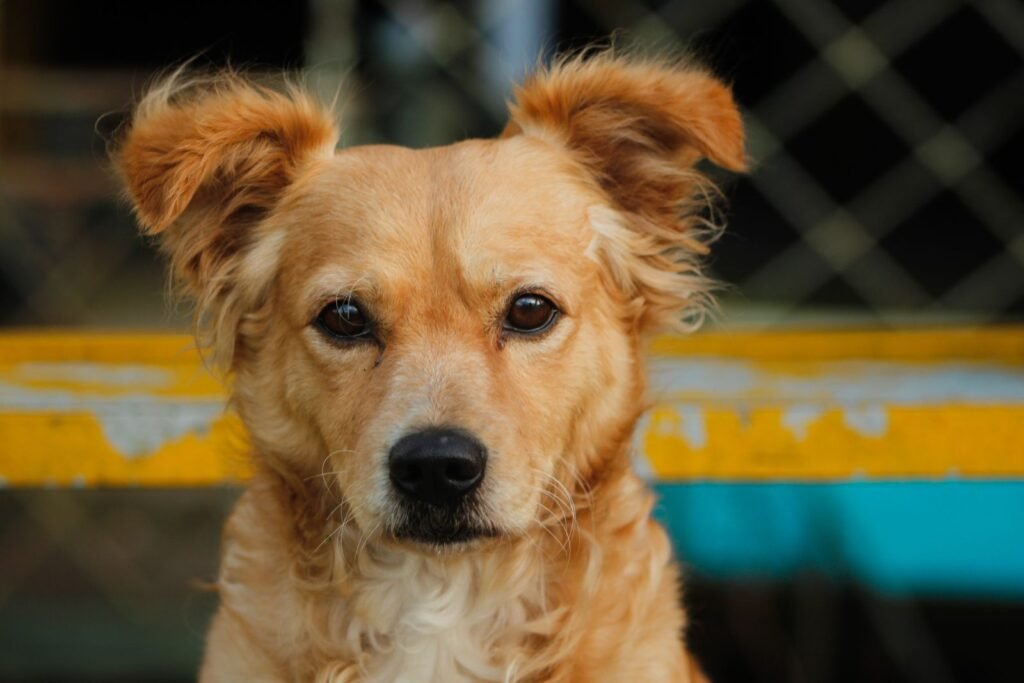
Many dogs in the UK are crossbreeds, whether deliberate “designer” crosses or happy accidents. Mixed breeds are harder to identify because genes do not blend neatly. A Labrador and Poodle cross might look almost entirely like a Labrador, almost entirely like a Poodle, or anywhere in between. Littermates can look completely different from one another.
Some common UK crosses and their typical clues include:
- Cockapoo: spaniel ears and head with a curly or wavy coat.
- Labradoodle: retriever build with a wavy or curly coat.
- Lurcher: sighthound shape crossed with a herding or terrier breed, often with a rough coat.
- Staffy cross: broad head and muscular build mixed with another type.
- Jackahuahua (Jack Russell x Chihuahua): small, alert, prick or button ears and big personality.
- Sprocker (Springer x Cocker Spaniel): classic spaniel look with high energy.
Dogs that are a mix of many breeds over several generations often settle into a medium-sized, short-to-medium coated “village dog” type with drop or semi-prick ears, which can make visual identification very difficult.
The limits of visual identification
It is worth being honest about the limitations. Research comparing visual breed identification with DNA results has repeatedly found that even experienced shelter staff and vets frequently get mixed breeds wrong. Appearance is controlled by a relatively small number of genes, so a dog can look strongly like one breed while carrying significant ancestry from others. Visual identification gives a sensible guess; it cannot reveal hidden ancestry.
When to consider a dog DNA test
If you want certainty, a canine DNA test is the only reliable option. Most involve a simple cheek swab you post to a laboratory. Results typically show the percentage of breeds detected and some tests also screen for known genetic health conditions. Consider a test if:
- You want to understand your rescue dog’s ancestry in detail.
- You are concerned about inherited health conditions.
- You need to estimate a puppy’s adult size more accurately.
Use the identifier first; it is free, and it often makes interpreting a DNA report easier because you already know what to look for.
Identifying a puppy’s breed
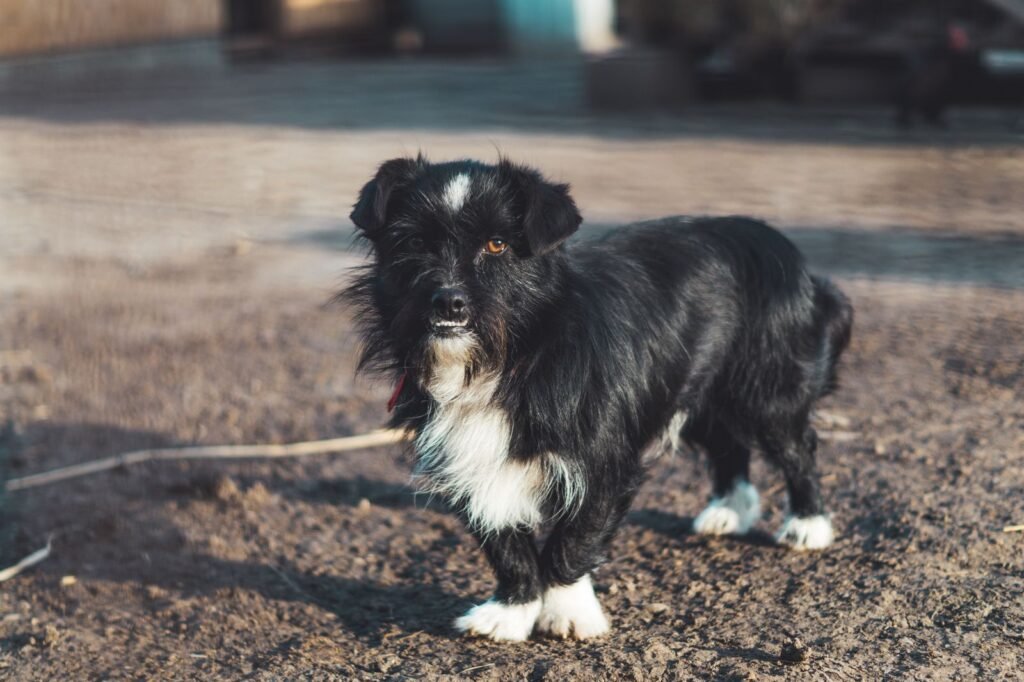
Puppies are particularly hard to identify. Their proportions change dramatically as they grow, ears may not yet have settled, and adult coats often come through between six and twelve months. Paw size is a popular but unreliable predictor of adult size. If you have a puppy of unknown background, describe what you can now and use the identifier again at around six months and once more when your dog is fully grown. You can also track growth using our weight calculator.
Five common breed identification myths
- “A black tongue means Chow Chow.” Chow Chows and Shar Peis do have blue-black tongues, but spots or patches of dark pigment on the tongue are common in many breeds and mixed breeds. On its own, tongue colour proves very little.
- “Big paws mean a big dog.” Paw size can hint at adult size, but it is far from reliable. Bone structure, the size of the parents and growth rate tell you much more.
- “A white chest patch means a crossbreed.” Small white markings appear in many purebred dogs, including Labradors and Staffies, and do not necessarily indicate mixed ancestry.
- “Brindle means Staffy.” Brindle coats appear in Greyhounds, Boxers, Dutch Shepherds, Mastiffs, Cairn Terriers and many others.
- “If it looks like a Labrador, it is mostly Labrador.” Because a few dominant genes control traits like coat length and ear shape, a dog with only partial Labrador ancestry can look convincingly Lab-like. This is one of the main reasons DNA results so often surprise owners.
Keeping these myths in mind will help you answer the identifier questions more objectively. Focus on structure, ear carriage, coat texture and behaviour, which are the clues that carry the most weight, and you will get a more useful set of matches.
Tips for describing your dog accurately
- Take photos from the side, the front and from above, with your dog standing naturally on a flat surface.
- Feel under long or fluffy coats to judge the true build; fur can hide a slim frame.
- Watch your dog off lead in a safe area to observe natural instincts.
- Ask a friend for a second opinion; owners often see what they expect to see.
What to do with your results
- Tailor enrichment: scent games for hound types, retrieve games for gundogs, herding-style ball games for collie types.
- Plan health checks: ask your vet about conditions associated with the breeds in your dog’s likely mix.
- Adjust feeding: use the likely adult size with our Calorie Calculator.
- Understand ageing: size affects how quickly dogs age; see our dog age calculator.
- Choose your next dog wisely: if you love your mixed breed’s traits, the breed selector can suggest breeds with similar characteristics.
Frequently asked questions
How can I tell what breed my dog is without a DNA test?
Look at size and build, head shape, ears, coat type, tail and behaviour, then compare against breed profiles. Our Dog Breed Identifier does this for you and ranks the most likely matches.
Is the breed identifier accurate?
It provides an informed estimate based on appearance and behaviour. It works best for purebred-looking dogs and simple crosses. For dogs with complex ancestry, treat it as a starting point and consider a DNA test for certainty.
Does coat colour tell me the breed?
Not reliably. Colours and patterns appear across many unrelated breeds. Coat texture and length are more useful clues.
Why does my dog not look like either parent breed?
Genetics is a lottery. Crossbreed puppies inherit different combinations of genes, so they can look like one parent, the other, or something quite unexpected.
Conclusion
Every dog has a story written in their shape, coat and instincts. By looking carefully at six key traits you can make a well-informed guess about your dog’s heritage, and that knowledge helps you train, feed, exercise and care for them better. Whatever the answer, the most important thing about your dog is not their pedigree but the life you share.